
Bed Bug
Nocturnal bloodsuckers that hide in mattress seams and furniture, nearly impossible to eliminate without professional heat or chemical treatment.
Identifying a Bed Bug
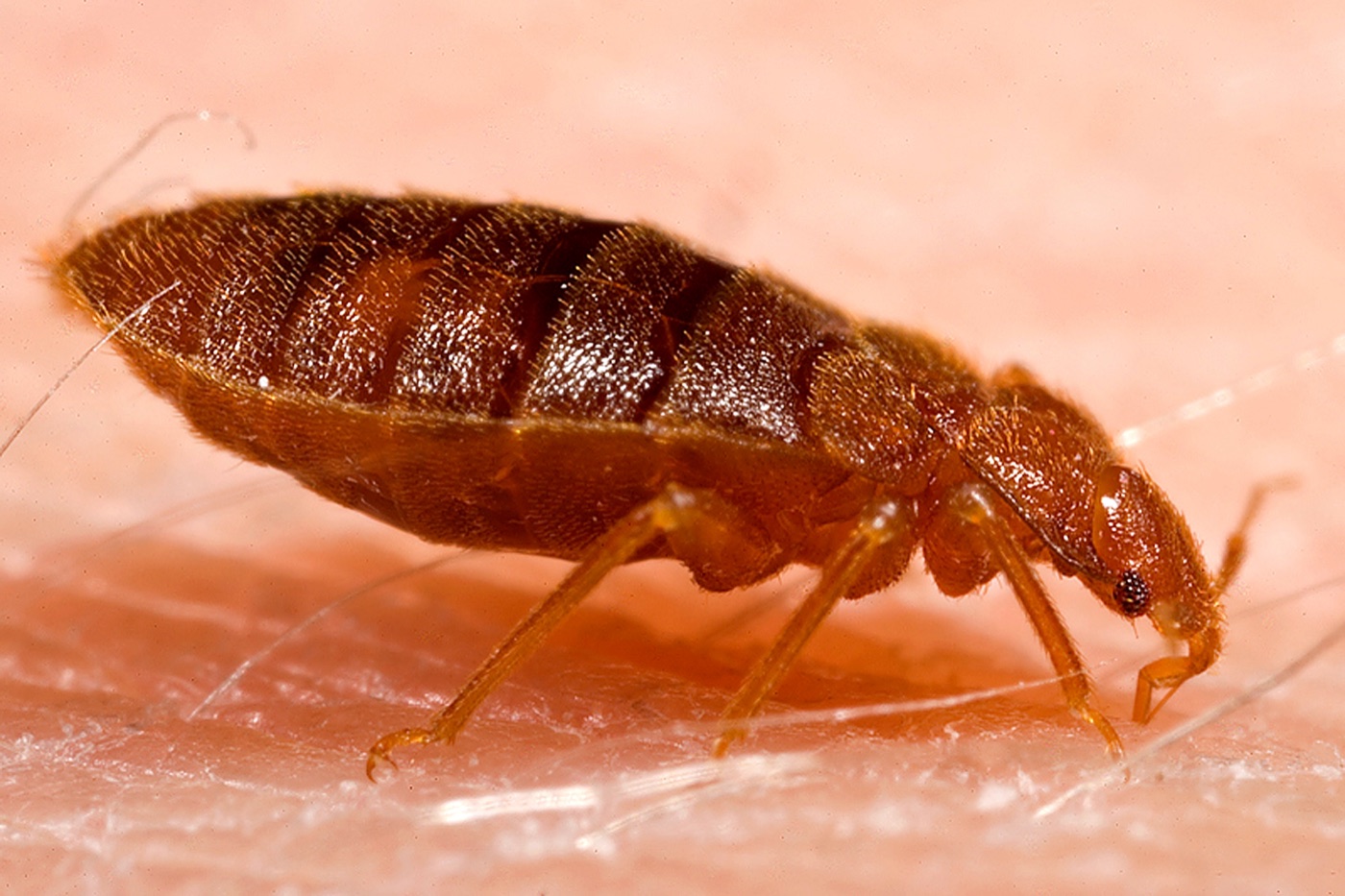
Bed bugs are small, flat, reddish-brown insects that feed exclusively on blood. They flatten their bodies to hide in mattress seams, box springs, furniture joints, and behind electrical outlets, emerging only at night to feed.
- Flat, oval body; reddish-brown when unfed, swollen and darker mahogany after feeding
- Adult size about ¼ inch, visible to the naked eye but expert at hiding in cracks and seams
- Nymphs are translucent/yellowish and nearly invisible when unfed
- Cannot fly or jump, spread through contact with infested luggage, furniture, and clothing
- Congregate near sleeping areas, mattress seams, headboards, bed frames, and sofas
Why Bed Bugs Are Dangerous
Bed bugs are a serious psychological and physical threat. While not known to transmit disease, they cause sleep deprivation, secondary skin infections, and severe emotional distress.
Bites & Health
Bites cause red, itchy welts that can trigger allergic reactions. Secondary infections from scratching require medical attention. Many develop anxiety and insomnia.
Rapid Spread
A single pregnant female can establish a full infestation. They spread through luggage, used furniture, clothing, and shared walls in multi-unit buildings.
Costly to Eliminate
Store-bought treatments rarely work, bed bugs can develop resistance to common pesticides. Failed DIY attempts waste months and allow populations to double.
Signs You Have a Bed Bug Problem
Bed bugs are masters at staying hidden until the infestation is large. Finding even one sign should prompt immediate professional inspection.
- Small reddish-brown stains or blood smears on sheets and pillowcases from crushed bugs
- Dark ink-dot-like fecal spots on mattress seams, headboard, and nearby walls
- Shed exoskeletons (pale yellow casings) near sleeping areas and inside furniture joints
- Sweet, musty odor noticeable in rooms with large, established infestations
- Linear or clustered red bites on exposed skin, neck, arms, and legs, appearing in the morning
Don’t Wait. They Spread Fast.
Bed bugs don’t self-resolve and DIY treatments almost always fail. A single missed egg can restart the infestation. BRD uses proven heat and chemical protocols that reach every life stage.
Get a Free Quote Or call 1-833-505-9715BRD Pest Solutions’s Bed Bug Elimination Process
Eliminating bed bugs requires treating all life stages, eggs, nymphs, and adults, in every harborage location. Store-bought sprays miss eggs and fail in wall voids.
Thorough Inspection
We inspect all sleeping surfaces, furniture, electrical outlets, baseboards, and adjacent rooms to map the full extent of the infestation before treatment begins.
Heat & Chemical Protocol
Depending on severity, BRD uses heat treatment (raising room temperature to 120°F+), EPA-approved residual chemicals, or a combination, treating every harborage location.
Follow-Up Monitoring
We place active monitors and schedule a follow-up inspection to confirm elimination. If bugs return within 30 days, we re-treat at no charge.
Don’t Wait for the
Problem to Grow.
Bed bugs don’t self-resolve. Every day you wait, the infestation grows. BRD’s proven elimination protocol covers every life stage, guaranteed. Get your free inspection today.