
Spider
Most house spiders are harmless, but Black Widows and Brown Recluses deliver venom that causes serious injury and are common across all of BRD's service areas.
Identifying a Spider
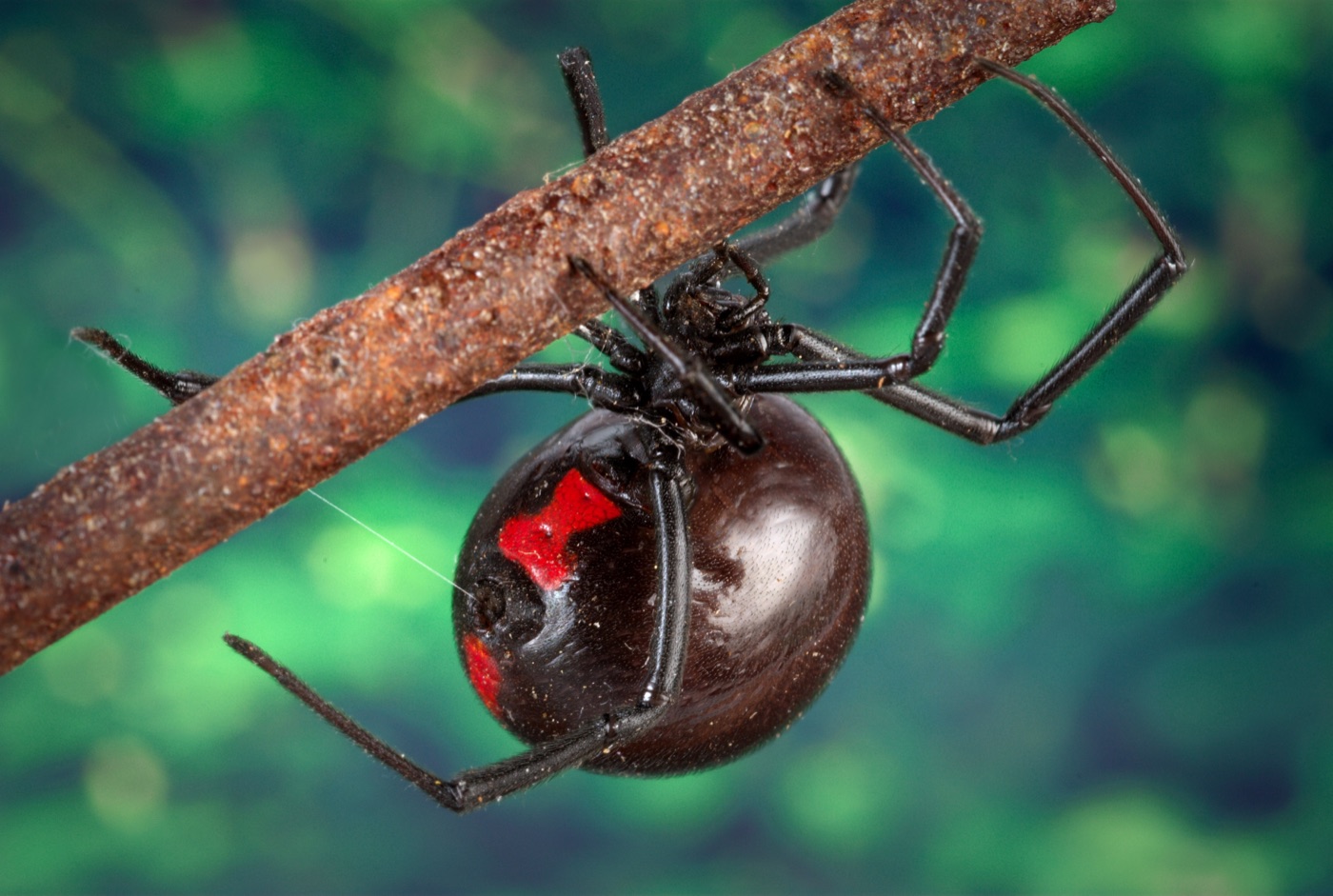
Most spiders that enter homes are harmless nuisance pests. The two to watch for in BRD's service areas are the Black Widow, jet black with a red hourglass marking, and the Brown Recluse, tan/brown with a violin-shaped mark on its back. Both are found across the South, Midwest, and Mountain West.
- Black Widow: shiny black, ¾–1½ inch, distinctive red hourglass on the underside of the abdomen
- Brown Recluse: tan to dark brown, ¼–¾ inch, violin-shaped marking on the cephalothorax
- Common house spiders are gray or brown, build irregular webs in corners and undisturbed spaces
- Wolf spiders are large and ground-dwelling, intimidating but not medically significant
- Enter through gaps in windows, doors, vents, and are often carried in with firewood
Why Spiders Are Dangerous
The presence of dangerous spiders like Black Widows and Brown Recluses near living areas is a serious risk, especially for children, pets, and elderly family members.
Venom Risk
Black Widow venom causes systemic neurotoxic pain. Brown Recluse venom causes necrotic tissue death at the bite site. Both can require hospitalization.
Hidden Harborage
Dangerous spiders prefer undisturbed areas, behind furniture, in stored boxes, under beds, in garage corners. Often not discovered until a bite occurs.
Secondary Pest Indicator
Spiders follow their food source. A significant spider population signals a larger underlying insect problem, often cockroaches or silverfish, feeding them.
Signs You Have a Spider Problem
Spider populations build slowly and often go unnoticed until a dangerous species is encountered. Here is what indicates a problem worth addressing.
- Cobwebs in corners, along ceiling edges, behind furniture, under stairs, and in garage rafters
- Egg sacs, papery white spheres attached to webs or tucked in crevices near living areas
- Black Widow webs: disorganized, strong, found near ground level in dark, undisturbed areas
- Brown Recluse sightings in storage areas, closets, shoes, and cardboard boxes
- Large populations of any spider species, indicating a significant underlying insect population
Don't Risk a Dangerous Bite
Black Widows and Brown Recluses are common across our service areas. If you're seeing spiders regularly, especially in living areas, BRD will identify species and treat harborage areas safely.
Get a Free Quote Or call 1-833-505-9715BRD Pest Solutions’s Spider Elimination Process
Effective spider control involves targeted treatment of harborage areas and addressing the underlying insect population that provides their food source.
Species Identification & Inspection
We identify the spider species present and locate all active harborage areas, focusing on where Black Widows and Brown Recluses are most likely to establish.
Residual Treatment
Professional insecticide applied to corners, wall-ceiling junctions, garages, crawl spaces, and exterior eaves. Webs are removed to force spiders into contact with treated surfaces.
Underlying Pest Reduction
We assess and treat the insect population supporting the spider infestation, eliminating the food source is the most reliable long-term spider control strategy.
Don’t Wait for the
Problem to Grow.
Most spiders are harmless, but Black Widows and Brown Recluses are not. If you see spiders regularly, BRD will inspect, identify, and treat. Get your free quote today.