
Silverfish
Fast-moving nocturnal insects that destroy books, wallpaper, and fabrics, and signal a serious hidden moisture problem in your home.
Identifying a Silverfish
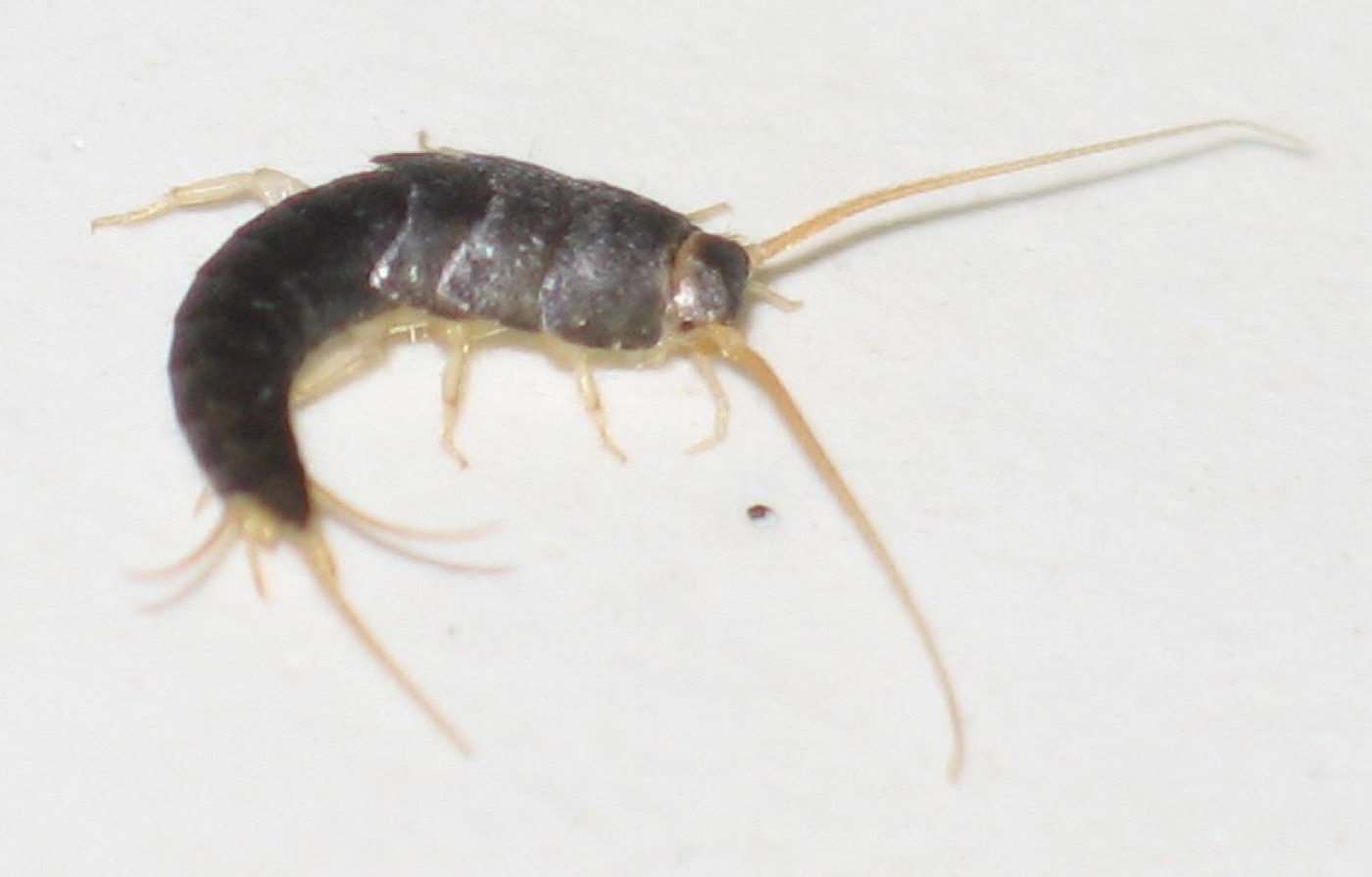
Silverfish are slender, wingless insects covered in silver-gray scales that give them a metallic sheen. Their fish-like wriggling movement and three long tail filaments make them unmistakable. They thrive in high-humidity environments and are most active at night.
- Silvery-gray metallic sheen; teardrop-shaped body ½–¾ inch tapering at the tail end
- Three long bristle-like tails extending from the abdomen; two long antennae at the head
- Very fast, wriggling movement resembling a fish swimming across flat surfaces
- Prefer temperatures 70–80°F with relative humidity above 75%
- Found in bathrooms, basements, attics, crawl spaces, and inside stored book boxes
Why Silverfish Are Dangerous
Silverfish don't bite, but they cause real property damage, and their presence signals a moisture problem that can lead to far worse structural and mold issues over time.
Material Damage
Feed on paper, wallpaper glue, book bindings, photographs, and natural fabrics. A hidden infestation can destroy irreplaceable documents and heirlooms.
Pantry Contamination
Contaminate dry goods by feeding on flour, pasta, cereal, and oats. They chew through packaging to access food, leaving droppings and silk-like webbing behind.
Moisture Indicator
Silverfish require high humidity to survive. Their presence in walls or ceilings often indicates a hidden moisture source, a slow leak, condensation, or poor ventilation.
Signs You Have a Silverfish Problem
Silverfish are fast and nocturnal, most infestations go unnoticed until material damage appears. Here is what to look for.
- Irregular feeding damage on paper products, books, magazines, cardboard boxes, and wallpaper edges
- Yellow stains on paper and fabrics from their feces and body fluids
- Molted skins, small paper-thin casings, left on shelving, inside boxes, and along baseboards
- Silver scales shed on shelf surfaces, inside stored clothing boxes, and in bathroom corners
- Live sightings in bathtubs, sinks, or on floors when lights turn on at night
Damage Is Already Happening
Silverfish damage accumulates silently. By the time you notice the signs, they have typically been feeding for months. BRD eliminates the infestation and identifies the moisture source driving it.
Get a Free Quote Or call 1-833-505-9715BRD Pest Solutions’s Silverfish Elimination Process
Silverfish control requires both eliminating the active population and addressing the moisture conditions sustaining it. Treating one without the other leads to reinfestation.
Moisture & Harborage Inspection
We identify high-humidity zones, crawl spaces, bathroom walls, attics, and pinpoint any water infiltration or ventilation issues sustaining the infestation.
Residual Insecticide Treatment
Professional-grade residual sprays and dusts applied to wall voids, crawl spaces, and all harborage areas. We treat cracks and under baseboards where silverfish hide during the day.
Humidity Reduction Plan
We provide recommendations to reduce the moisture conditions that allowed silverfish to establish, proper ventilation, vapor barriers, and plumbing fixes that address the root cause.
Don’t Wait for the
Problem to Grow.
Silverfish work silently, by the time you see them, they have been feeding for months. BRD eliminates the population and helps address the moisture issue attracting them.