
House Mouse
The most common rodent in American homes, can squeeze through a dime-sized gap, reproduces every three weeks, and contaminates everything it touches.
Identifying a House Mouse
House mice are small, gray-brown rodents with large ears, pointed snouts, and long, thin tails. They are the most common rodent found in residential structures, most homeowners hear them before they ever see them.
- Gray-brown fur with lighter underside; 3–4 inch body with a 2–4 inch tail
- Large round ears; pointed muzzle; small black eyes that reflect light
- Can squeeze through any gap ¼ inch or larger, about the diameter of a dime
- Nocturnal; most activity detected after dark by scratching or scurrying sounds
- Nest in wall voids, insulation, behind appliances, and inside stored cardboard boxes
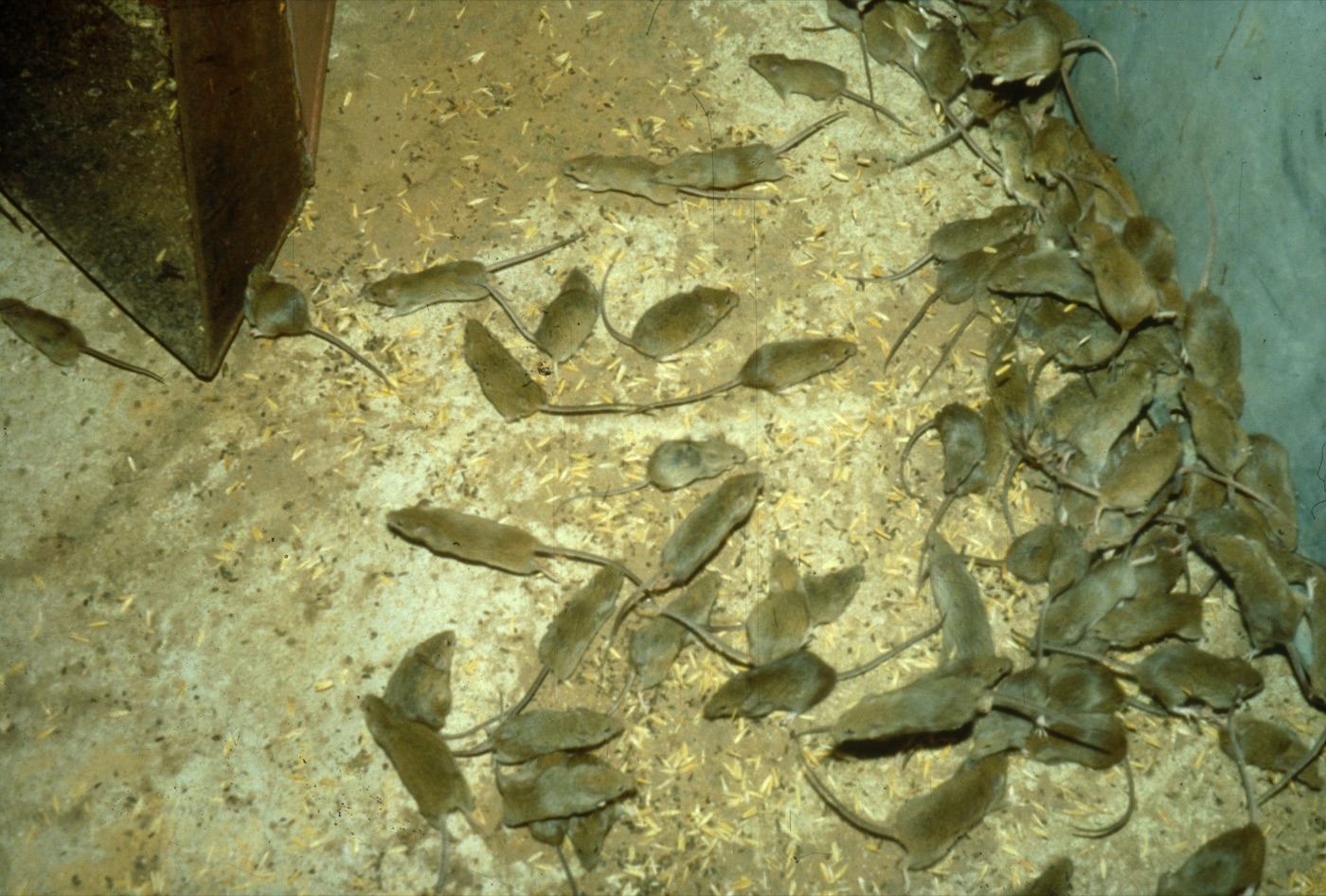
Why House Mice Are Dangerous
House mice are not just unsettling, they are a genuine health threat and cause significant property damage from constant gnawing and nesting behavior.
Disease Risk
Spread Hantavirus, Salmonella, and Leptospirosis through droppings, urine, and saliva. Contaminated food preparation surfaces are a primary transmission route.
Fire Hazard
Gnaw on electrical wiring inside walls, creating bare conductors. The NFPA estimates 25% of fires with unknown causes are attributable to rodent wire chewing.
Explosive Reproduction
A single pair produces 35–60 offspring per year. A small winter infestation can become hundreds before spring if entry points are not sealed.
Signs You Have a House Mouse Problem
Mice are almost always heard before they are seen. Here is what to look for in the areas they most commonly inhabit.
- Droppings, small, rod-shaped, ⅛–¼ inch, along walls, in cabinets, and behind appliances
- Gnaw marks on food packaging, wood trim, and electrical wiring insulation
- Scratching or scurrying sounds in walls, ceilings, and under floors at night
- Nesting material, shredded paper, insulation, fabric, found in hidden corners or behind appliances
- Grease rub marks along wall edges and baseboards where mice travel repeatedly
One Mouse Means Dozens More
House mice are rarely solitary. Seeing one means a colony is already established, usually inside your walls. BRD locates the entry points and eliminates the population before it grows further.
Get a Free Quote Or call 1-833-505-9715BRD Pest Solutions’s House Mouse Elimination Process
Effective mouse control requires eliminating the active population, locating all entry points, and sealing them to prevent re-entry, in that order.
Entry Point Inspection
We perform a comprehensive exterior inspection identifying every gap ¼ inch or larger, around pipes, foundation cracks, door gaps, and utility penetrations, mapping all entry routes.
Interior Population Elimination
Strategically placed snap traps and tamper-resistant bait stations eliminate the active population. We monitor trap activity to confirm reduction and identify high-traffic areas.
Exclusion & Sealing
We seal all identified entry points using gnaw-resistant materials, steel wool, hardware cloth, and caulk, creating a permanent barrier. This step separates pest elimination from temporary control.
Don’t Wait for the
Problem to Grow.
One mouse can become dozens within weeks. BRD locates entry points, eliminates the population, and seals the access, giving you a long-term solution, not a temporary fix.