
Norway Rat
The largest rat in North America, a powerful burrowing rodent that undermines foundations, chews through pipes, and spreads leptospirosis through contaminated soil and water.
Identifying a Norway Rat
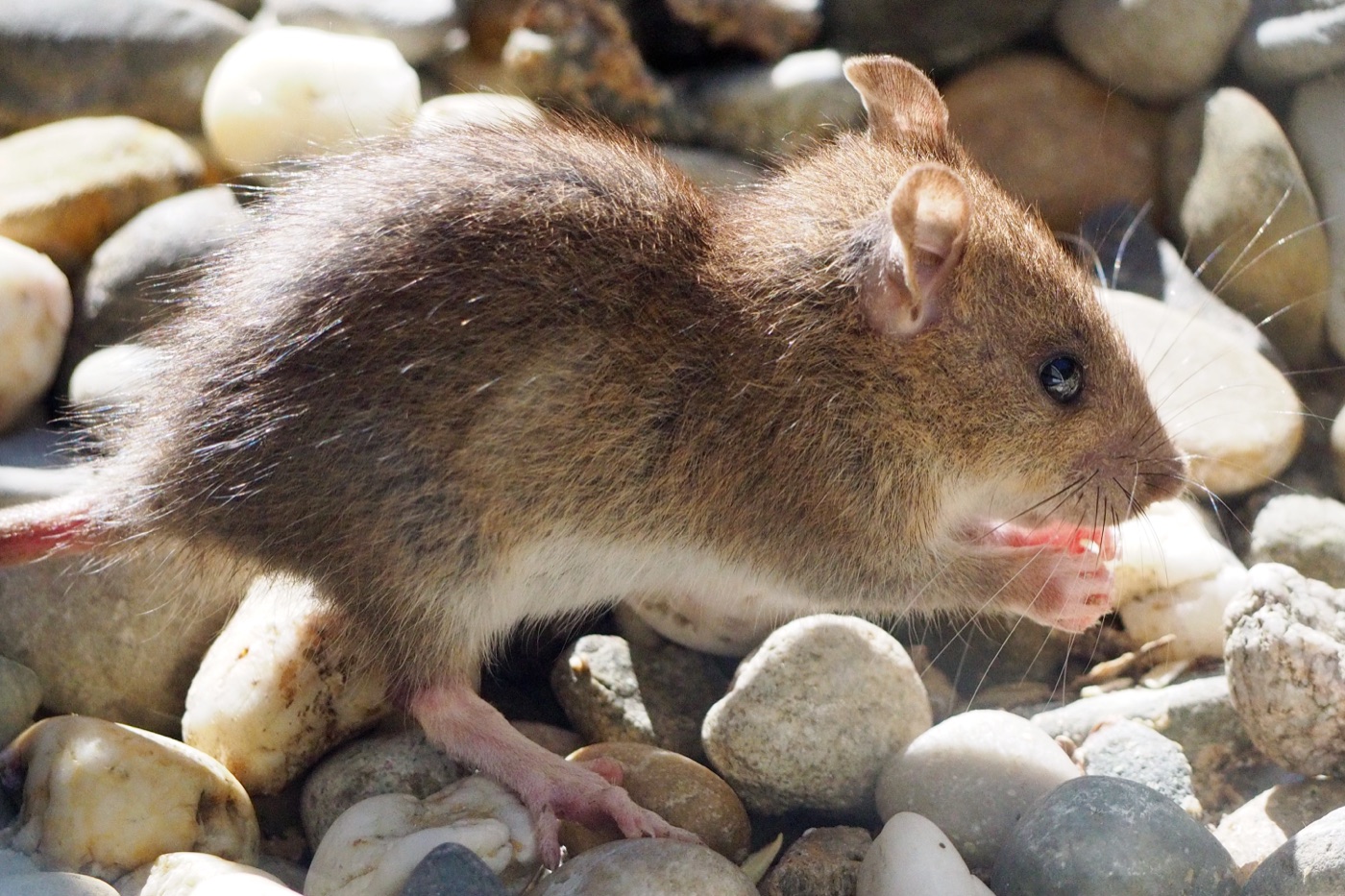
Norway rats (also called brown rats or sewer rats) are the largest rat species found in US homes. They are stocky, powerful burrowers that nest underground or at ground level, rarely climbing like the roof rat. Common in older urban areas, near water sources, and wherever food waste is accessible.
- Heavy-bodied, 7–9 inch body; blunt nose; small ears; tail shorter than body
- Coarse brown/gray fur with a lighter underbelly; stocky and muscular build
- Powerful burrowers, create tunnels under foundations, slabs, and garden beds
- Prefer ground level and basement environments; enter through crawl space vents and sewer connections
- Highly suspicious of new objects, requires strategic trap placement and patience to control
Why Norway Rats Are Dangerous
Norway rats are among the most destructive rodents in residential environments, causing structural, sanitary, and safety damage that compounds with every passing week.
Structural Undermining
Burrowing under foundations, concrete slabs, and retaining walls causes soil erosion and settling. Active burrow networks near structures pose real structural risk over time.
Disease Transmission
Primary vector for leptospirosis, transmitted through urine-contaminated soil and water. Also spread Hantavirus and rat-bite fever through droppings and bites.
Utility Line Damage
Gnaw through PVC plumbing, gas lines, and electrical conduit. Norway rat damage to utility lines regularly causes flooding, gas leaks, and electrical failures.
Signs You Have a Norway Rat Problem
Norway rats are cautious and primarily active after dark. Most infestations are confirmed through physical evidence rather than direct sightings.
- Burrow entrances near foundations, under slabs, along fence lines, 2–3 inch diameter holes with fresh soil
- Large droppings, ¾ inch, blunt ends, along walls, behind appliances, and in basement areas
- Gnaw damage on food packages, wood trim, plumbing pipes, and electrical cable insulation
- Grease rub marks along wall edges at ground level from the oil in their fur
- Damaged vegetation, garden beds, or compost areas where Norway rats forage nightly
Underground Burrows Are Hard to Find Alone
Norway rat burrow networks extend well beyond what's visible from the surface. BRD's inspectors know exactly where to look, and how to eliminate the colony without populations simply relocating.
Get a Free Quote Or call 1-833-505-9715BRD Pest Solutions’s Norway Rat Elimination Process
Eliminating Norway rats requires addressing their underground harborage as well as interior entry points. Interior trapping alone is rarely sufficient for a full colony.
Exterior & Interior Survey
We locate all active burrow entrances, assess the extent of underground activity, and identify every point where rats access the structure, sewers, crawl spaces, and ground-level gaps.
Rodenticide & Burrow Treatment
Tamper-resistant bait stations placed along active runways and near burrow entrances. Direct burrow treatment where appropriate to reach the colony underground.
Exclusion & Sanitation
We seal all ground-level entry points and provide sanitation recommendations, eliminating food and harborage sources that sustain the colony and attract new populations.
Don’t Wait for the
Problem to Grow.
Norway rats burrow deep and spread fast. The longer an infestation goes untreated, the more structural damage accumulates. BRD finds the colony and eliminates it from the ground up.