
Roof Rat
An agile climber that enters attics, walls, and treetops, chewing wiring, contaminating insulation, and spreading disease through droppings and urine.
Identifying a Roof Rat
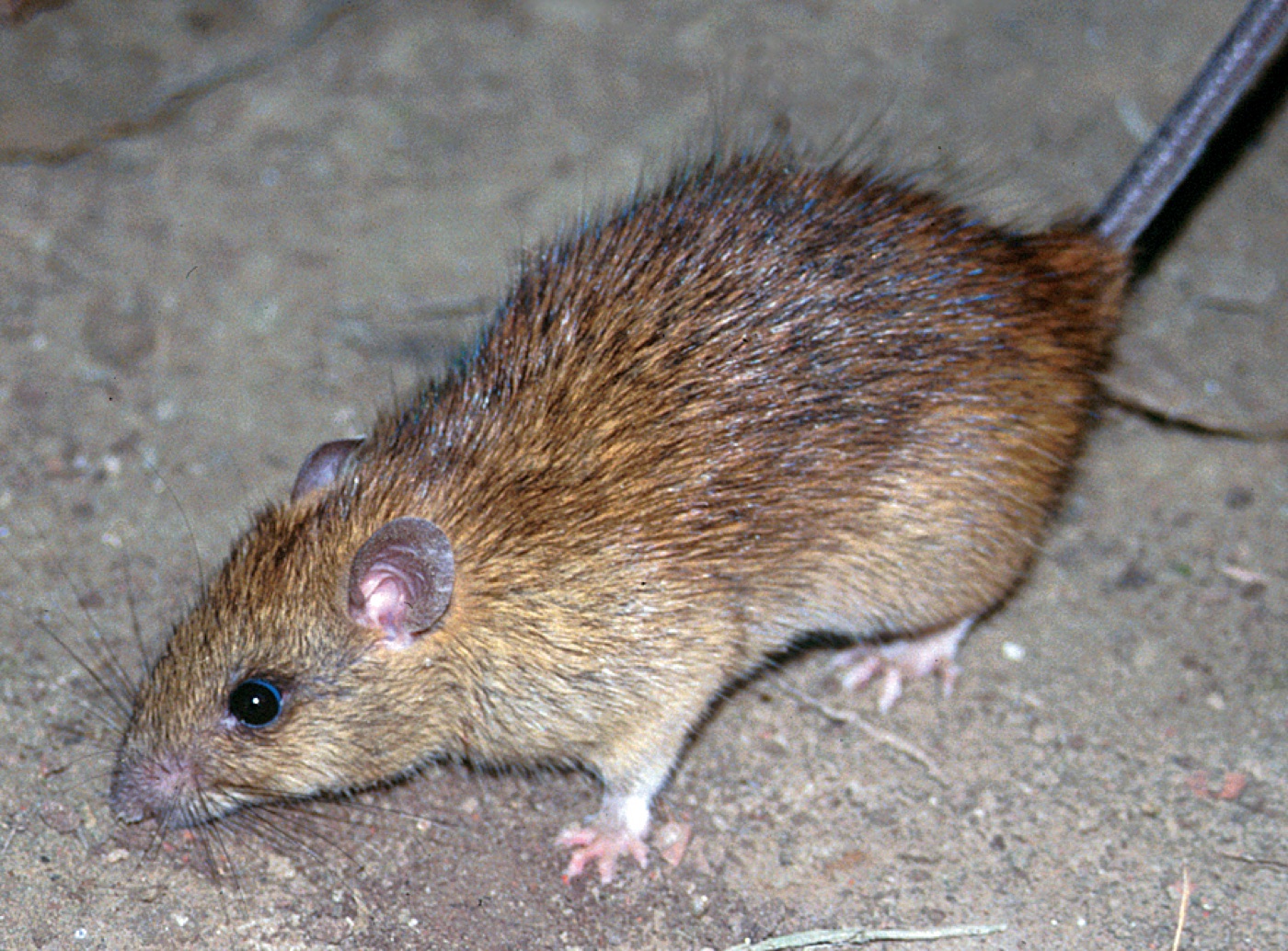
Roof rats (also called black rats or ship rats) are slender, agile rodents that prefer elevated harborage areas. Unlike Norway rats, they climb readily, entering homes through tree branches, rooflines, utility lines, and roof vents. They are common in warm coastal and southern regions.
- Slender body 6–8 inches; tail longer than the body; dark brown to black smooth fur
- Large ears; pointed snout; body is lighter and more graceful-looking than Norway rats
- Excellent climbers, enter through roofline gaps, eave vents, and overhanging tree branches
- Nest in attics, wall voids, dense vegetation, and palm tree fronds
- Active at night; highly cautious of new objects placed in their established travel routes
Why Roof Rats Are Dangerous
Roof rats pose a serious threat to both structural integrity and human health. Their elevated access routes make them harder to detect until significant damage is already done.
Fire & Structural Damage
Gnaw through electrical wiring in attics and walls, one of the leading causes of attic fires. Also damage HVAC ductwork, insulation, and wood framing.
Disease Transmission
Carry and transmit Salmonella, leptospirosis, and rat-bite fever. Droppings in attic insulation contaminate HVAC air flow throughout the home.
Difficult Detection
Because they travel high, roof rat infestations in attics often go undetected for months, during which time they breed, chew wiring, and shred insulation.
Signs You Have a Roof Rat Problem
Roof rat activity is typically detected through attic evidence, outdoor markings, and nighttime sounds from above.
- Scurrying and scratching sounds in the attic or ceiling, primarily between 10 PM and 2 AM
- Droppings in the attic, along rafters, and near HVAC ducts, elongated ½ inch with pointed ends
- Gnaw marks on roof vents, eave boards, utility lines, and attic wood framing
- Greasy rub marks along beams, pipes, and walls where rats travel the same path repeatedly
- Tree branches or utility lines within 4 feet of the roofline, roof rats use these as entry highways
Attic Damage Adds Up Fast
Roof rats in the attic shred insulation, chew wiring, and contaminate HVAC return air. The longer the infestation goes untreated, the more expensive the repair.
Get a Free Quote Or call 1-833-505-9715BRD Pest Solutions’s Roof Rat Elimination Process
Roof rat control requires eliminating the interior population while simultaneously cutting off the exterior access routes they use to enter the structure.
Attic & Roofline Inspection
We thoroughly inspect the attic space and exterior roofline, identifying active nesting areas, droppings concentrations, and all gap entry points, including vents, eave gaps, and utility penetrations.
Targeted Rodenticide & Trap Program
Tamper-resistant bait stations and snap traps placed in the attic along active runways, monitored and refreshed on schedule until the population is eliminated.
Roofline Exclusion
We seal all identified entry points using hardware cloth, steel flashing, and foam sealant. Overhanging branches and utility lines providing roof access are noted for trimming.
Don’t Wait for the
Problem to Grow.
Roof rats in the attic create fire hazards, insulation damage, and HVAC contamination. BRD finds them, eliminates them, and closes every entry point, guaranteed.