
Earwig
Pincer-bearing insects that invade in large numbers through foundation gaps, drawn by moisture and attracted to ground-floor rooms, kitchens, and basements.
Identifying an Earwig
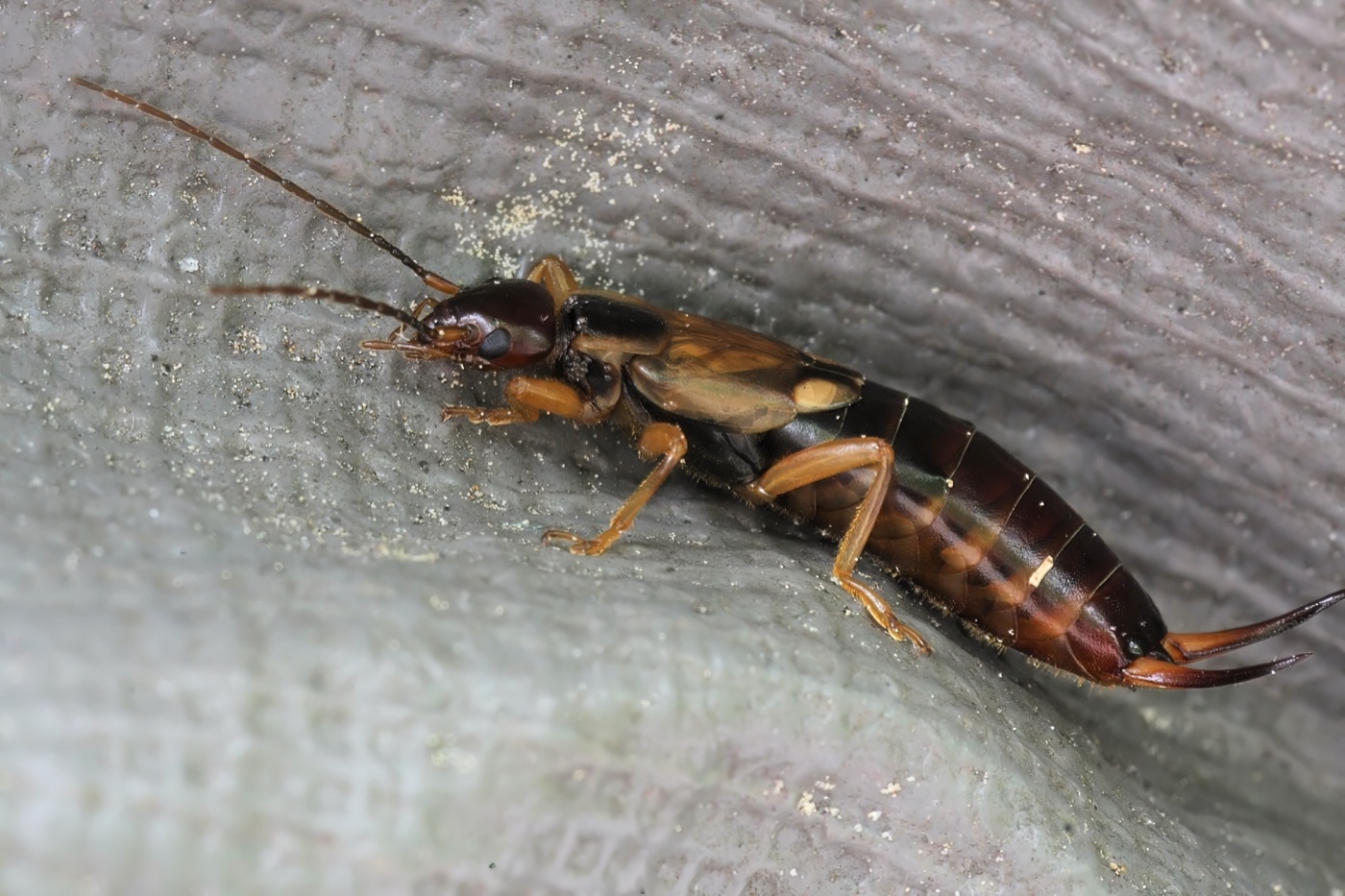
Earwigs are elongated, reddish-brown insects easily identified by the pair of curved forceps (cerci) at their abdomen. Despite their intimidating appearance, earwigs rarely bite humans, but they do invade homes in large numbers and cause plant damage outdoors.
- Reddish-brown, flattened body ½–1 inch; distinctive paired forceps at the abdomen
- Forceps are curved in males, straighter in females, used for defense and courtship, not attack
- Short, leathery wings present, earwigs rarely fly despite having them
- Move quickly when disturbed; prefer dark, moist hiding spots under rocks, mulch, and bark
- Enter homes through foundation cracks, door gaps, and weep holes during hot or wet weather
Why Earwigs Are Dangerous
Earwigs won't bite, but a large-scale earwig invasion is disruptive, damaging to plants, and a sign of moisture and entry point problems that also attract more serious pests.
Home Invasion
Earwigs enter in waves during hot, dry weather or heavy rain, invading kitchens, bathrooms, and basements through the same gaps used by cockroaches and rodents.
Garden Damage
Feed on young seedlings, flowers, and vegetables overnight. A single earwig colony can destroy a flower bed or vegetable garden within days of population peak.
Entry Point Indicator
Their presence signals foundation gaps, moisture near the home, and landscape conditions that attract more damaging pests, including termites and carpenter ants.
Signs You Have an Earwig Problem
Earwig invasions happen fast, especially after heavy rain or when temperatures drop. Here is what you will notice.
- Large numbers of pincer-bearing insects found under mulch, stepping stones, and landscape timbers
- Ragged, irregular feeding damage on soft plant tissue, flowers, and seedlings overnight
- Earwigs appearing indoors in large numbers, especially in basements and ground-floor rooms
- Foul odor secreted from glands when earwigs are disturbed or accidentally crushed
- Entry through weep holes, door sweeps, and window frame gaps after rain events
Large Invasions Need Professional Attention
Store-bought traps catch individuals but don't stop an invasion. BRD treats the source, perimeter harborage areas and entry points, to stop earwigs from coming in.
Get a Free Quote Or call 1-833-505-9715BRD Pest Solutions’s Earwig Elimination Process
Earwig control focuses on the exterior perimeter, where they breed and harbor, paired with sealing the entry points they use to invade indoors.
Perimeter Assessment
We evaluate landscape conditions contributing to earwig pressure: mulch depth, moisture accumulation near the foundation, exterior lighting attracting insects, and existing entry gaps.
Perimeter Barrier Treatment
Professional granular and spray insecticide applied to the foundation perimeter, mulch beds, and around exterior doors and windows, creating a lethal barrier earwigs cross before entering.
Entry Point Recommendations
We identify the specific gaps and conditions allowing earwigs inside and recommend exclusion measures, door sweeps, weep hole covers, and caulking that also block more harmful pests.
Don’t Wait for the
Problem to Grow.
A few earwigs today can turn into hundreds overnight after rain. BRD's perimeter treatment stops invasions before they start, get a free quote.