
Carpenter Ant
The largest ant in North America, not an eater of wood but an excavator of it, carving smooth galleries through moist or damaged wood inside structural beams and wall voids.
Identifying a Carpenter Ant
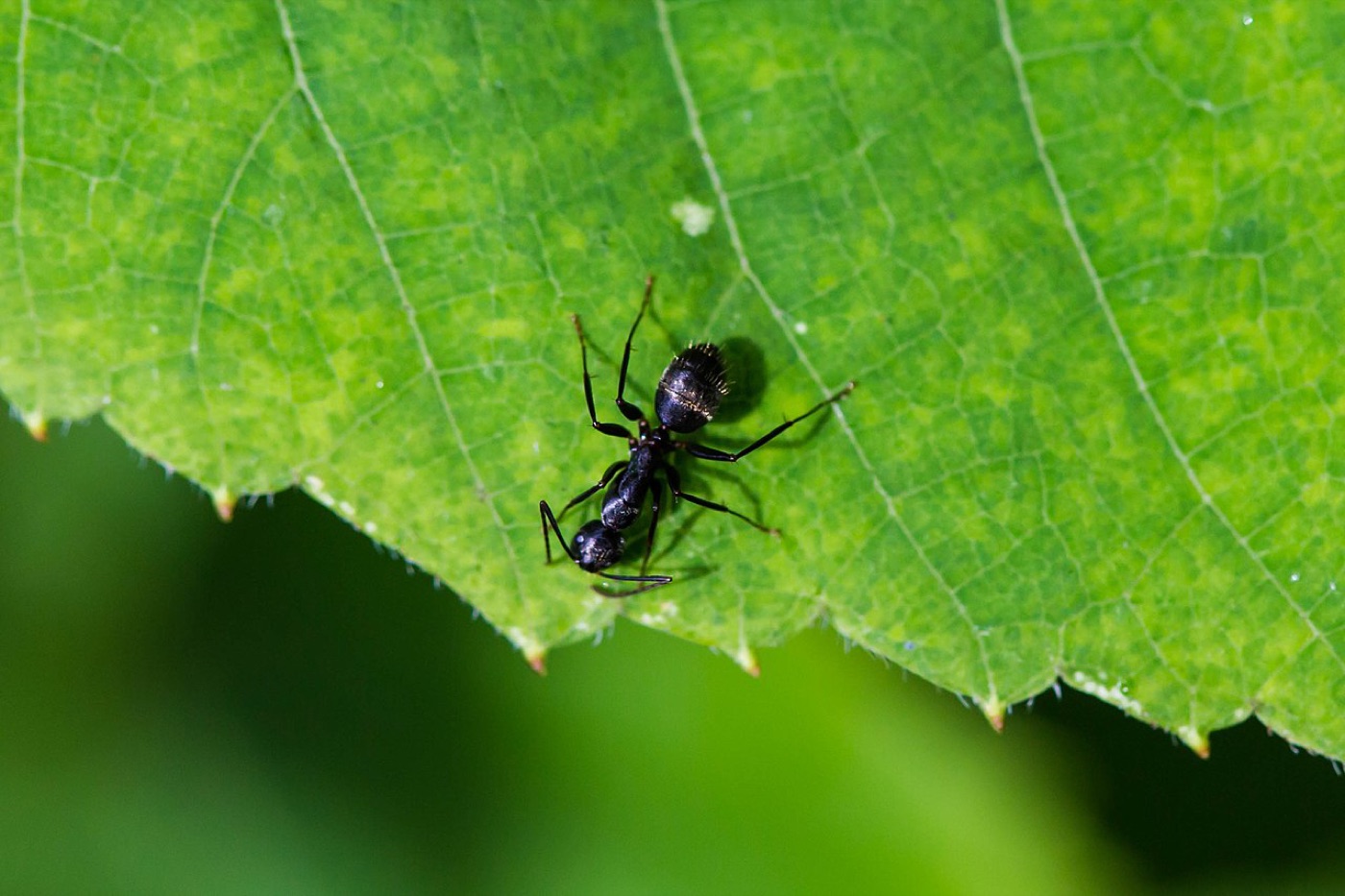
Carpenter ants are among the largest ant species in North America. Unlike termites, they do not eat wood, they excavate it, creating smooth-walled galleries to nest in. They are most destructive in moist or damaged wood, where they accelerate decay that often began with a water leak.
- Large black, red, or bi-colored ants ¼–¾ inch, significantly larger than common pavement ants
- Smooth, evenly arched thorax when viewed from the side (termite workers have a more uniform shape)
- Workers produce fine sawdust-like frass mixed with insect parts pushed out of gallery openings
- Most active at night, particularly between 10 PM and 2 AM
- Swarmers (winged queens and males) emerge in spring, often the first visible sign of a mature colony
Why Carpenter Ants Are Dangerous
Carpenter ants don't just nest in damaged wood, their galleries expand and weaken structural beams, door frames, and window sills over time.
Structural Weakening
Excavate galleries in load-bearing beams, joists, and wall studs. A mature colony creates extensive tunneling networks that compromise structural integrity over years.
Moisture Problem Indicator
Almost always nest in wood with elevated moisture content. Their presence signals an active water problem, a roof leak, plumbing drip, or poor ventilation.
Multiple Satellite Nests
The main colony (often in a tree stump or log outside) sends workers to establish satellite nests inside structures. Treating only the interior nest does not eliminate the parent colony.
Signs You Have a Carpenter Ant Problem
Carpenter ant activity is most noticeable at night. Here is what to look for year-round.
- Coarse sawdust-like frass mixed with dead insect parts pushed from exit holes in wood
- Large black or bi-colored ants appearing inside walls, around doors, windows, and in kitchens
- Rustling, crunching sounds inside walls at night when the house is quiet
- Swarmers (large winged ants) emerging from walls in spring, a sign of a mature, established colony
- Soft, hollow-sounding wood with smooth excavated galleries when probed with a screwdriver
They're Probably Nesting Inside Your Walls
Carpenter ants inside the home almost always have a satellite nest in the structure. BRD finds the parent colony, eliminates both nests, and identifies the moisture source driving the infestation.
Get a Free Quote Or call 1-833-505-9715BRD Pest Solutions’s Carpenter Ant Elimination Process
Eliminating carpenter ants requires finding and treating both the satellite nest inside and the parent colony outside, otherwise the infestation continues.
Colony Location
We follow carpenter ant activity patterns to locate satellite nests inside the structure and identify the parent colony (typically a moist stump, log, or exterior wood pile within 300 feet).
Direct Colony Treatment
Professional dust or liquid insecticide applied directly into wall void nests. We treat the parent colony outside and foraging trails to intercept workers returning to both nests.
Moisture Source Identification
We identify the moist wood that attracted carpenter ants, often a roof leak, condensation point, or plumbing drip, and recommend repairs that eliminate the nesting habitat permanently.
Don’t Wait for the
Problem to Grow.
Carpenter ants inside your home mean a nest in your walls and a parent colony outside. BRD finds both, treats both, and identifies the moisture problem driving the infestation.