
Subterranean Termite
Responsible for 95% of all termite damage in the US, a colony of millions that works invisibly underground until structural failure becomes a real possibility.
Identifying a Subterranean Termite
Subterranean termites are the most destructive insect in North America, causing over $5 billion in property damage annually. They live in underground colonies that can number in the millions and access structures through mud tubes they build along foundation walls.
- Workers: creamy white, soft-bodied, ⅛ inch, rarely seen outside their mud tubes
- Soldiers: larger orange-tan head with powerful mandibles for colony defense
- Swarmers (reproductives): dark brown/black with two equal-length wings, appear near windows in spring
- Mud tubes, pencil-width tunnels of soil and saliva, are the most visible diagnostic sign
- Damage follows wood grain, hollow sounds, bubbling paint, or soft spots indicate active feeding
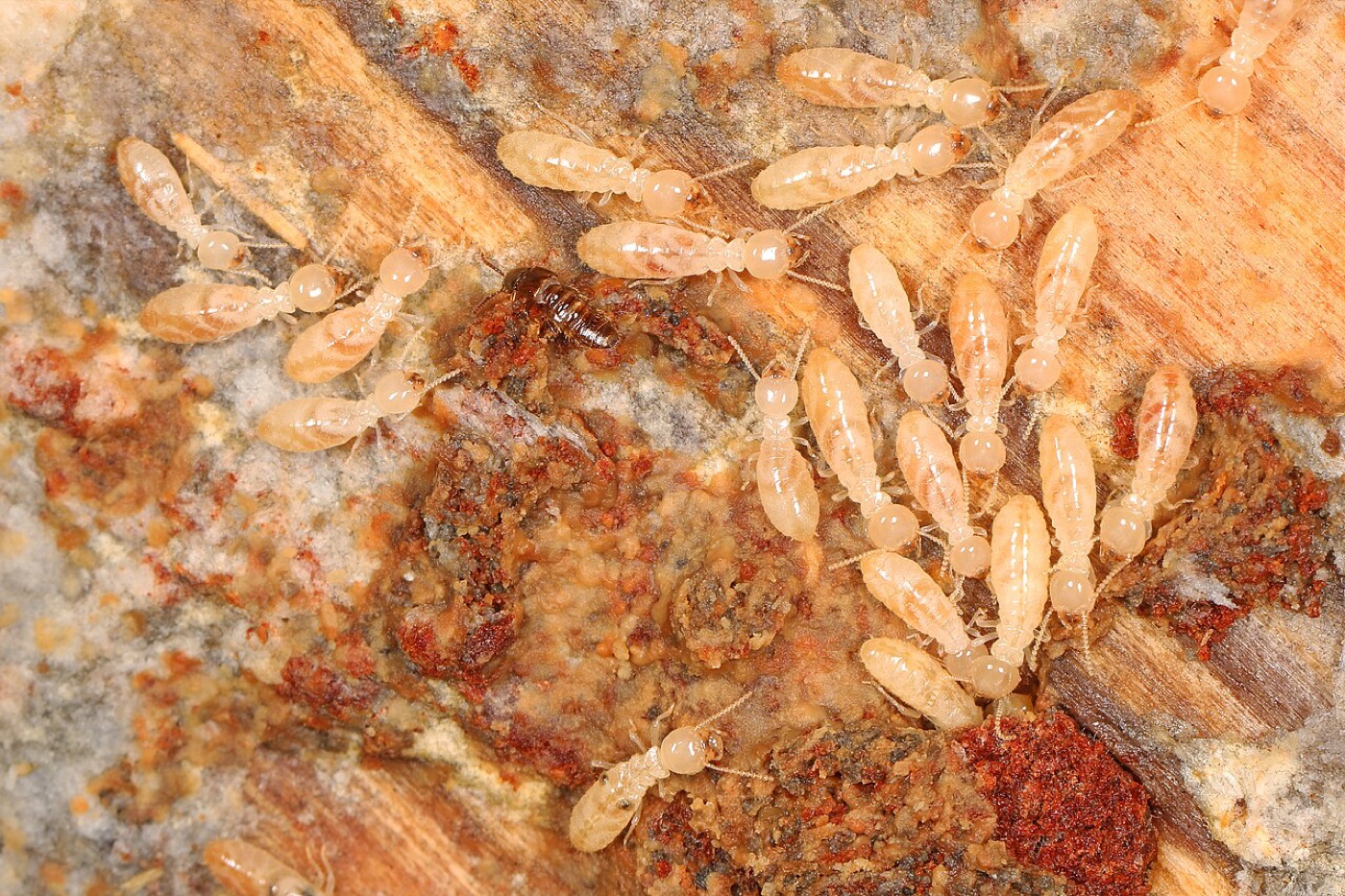
Why Subterranean Termites Are Dangerous
Subterranean termites don't make noise. They don't cause panic. They just eat, continuously, for months or years before the damage becomes visible.
Catastrophic Damage
A mature colony consumes up to a pound of wood per day. Most damage occurs inside walls and floor joists, invisible until structural integrity is already compromised.
Undetected for Years
Termites enter through hairline cracks in foundations and build mud tubes inside wall voids. Most infestations are discovered only during renovation or sale inspection.
Financial Liability
Termite damage is rarely covered by homeowners insurance. Average treatment and repair costs range from $3,000–$30,000 depending on infestation extent and structural damage.
Signs You Have a Subterranean Termite Problem
Subterranean termites work silently. Most homeowners only find evidence after significant damage has occurred. Here is what to look for during your own inspection.
- Mud tubes on foundation walls, crawl space piers, or exterior surfaces, even pencil-width
- Hollow-sounding wood when tapped firmly with a hard object
- Bubbling or uneven paint on interior walls, often mistaken for water damage
- Swarmers (winged termites) near windows and doors in late winter or spring
- Discarded wings near windowsills, entry points, or light sources after a swarm event
The Damage Is Happening Now
Subterranean termites work 24/7/365. By the time you see signs, they have typically been feeding for months. BRD's inspection identifies active colonies and stops damage before it compounds further.
Get a Free Quote Or call 1-833-505-9715BRD Pest Solutions’s Subterranean Termite Elimination Process
Subterranean termite control requires eliminating the underground colony, not just the termites visible inside the structure. Surface treatments alone are insufficient.
Professional Termite Inspection
We perform a thorough inspection of all accessible wood, foundation perimeter, crawl space, and exterior landscaping, mapping all mud tube activity, damage, and entry points.
Liquid or Bait Treatment
Depending on infestation severity, BRD uses Termidor® liquid treatment (a non-repellent that termites carry back to the colony) or the Sentricon® bait system placed around the perimeter.
Annual Monitoring Plan
Termite protection is ongoing. We offer annual inspection plans to monitor for new activity and maintain treatment efficacy, protecting your investment long term.
Don’t Wait for the
Problem to Grow.
Termite damage is silent, expensive, and rarely covered by insurance. BRD's professional treatment stops the colony at the source, and annual monitoring keeps it that way.