
Carpenter Bee
Solitary bees that drill perfect round holes in unpainted wood, causing escalating structural damage to decks, fascia boards, eaves, and fences year after year.
Identifying a Carpenter Bee
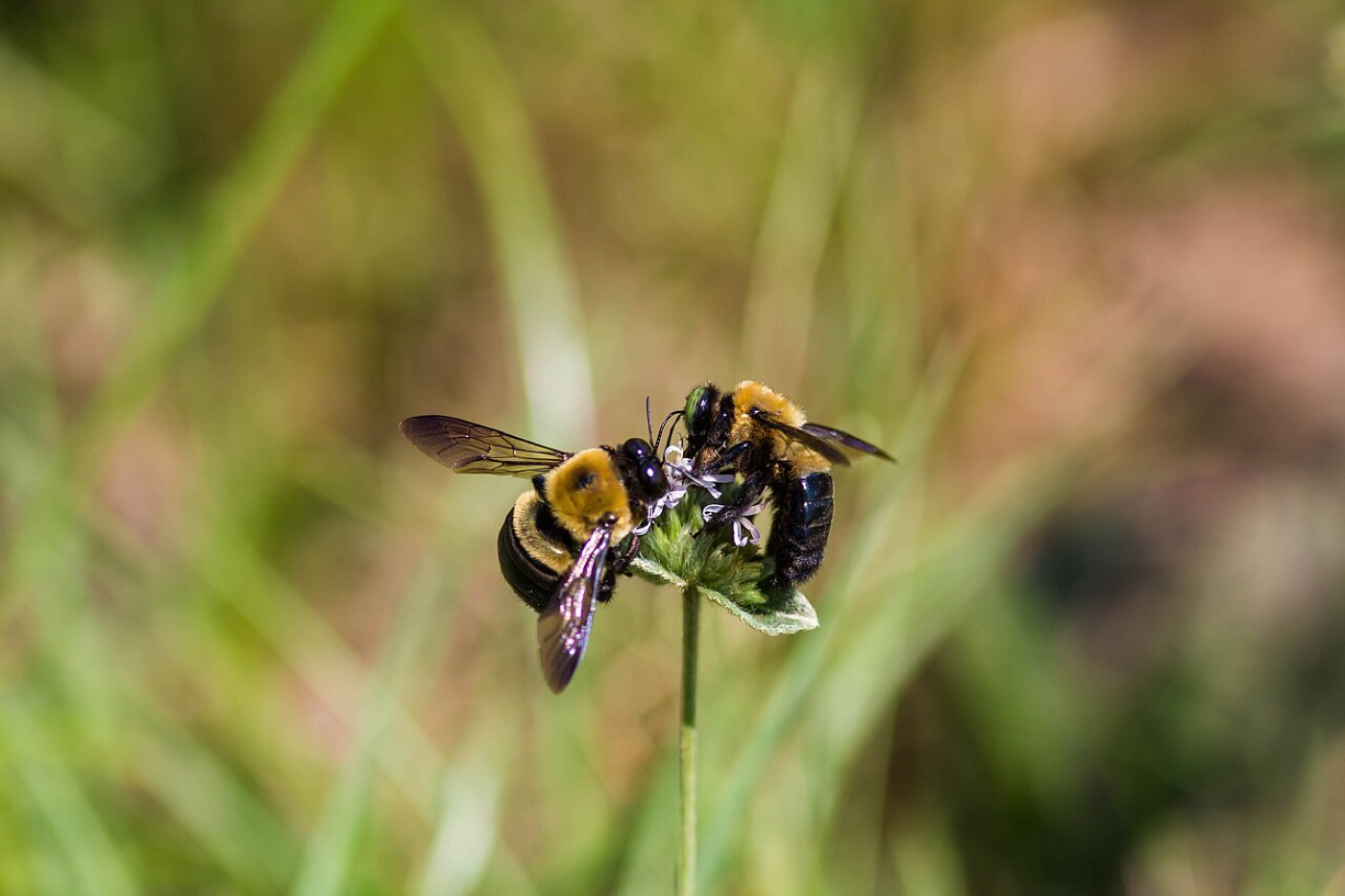
Carpenter bees closely resemble bumblebees but have a smooth, shiny black abdomen (bumblebees have a fuzzy yellow abdomen). They are solitary bees, not social insects, and females drill perfectly round ½-inch holes in unfinished or unpainted wood to create nesting galleries.
- Large bee ¾–1 inch; shiny black abdomen distinguishes from the fuzzy abdomen of bumblebees
- Females drill perfectly round ½-inch holes, then turn 90° to run a gallery along the wood grain
- Males hover aggressively near nest openings but have no stinger and cannot sting
- Females can sting but rarely do unless directly handled or trapped
- Strongly prefer bare, weathered, or unpainted wood, decks, fascia boards, window trim, eaves
Why Carpenter Bees Are Dangerous
A single carpenter bee is easy to dismiss. But each returning season, the gallery grows larger, and woodpeckers learn to excavate the tunnels, multiplying the damage significantly.
Escalating Gallery Damage
Each spring, females return to existing galleries and extend them, sometimes up to 10 feet deep over multiple years. Old galleries weaken fascia boards, rafters, and decking at key connection points.
Woodpecker Attraction
Woodpeckers hear larvae inside carpenter bee galleries and excavate the wood to reach them. Secondary woodpecker damage often exceeds the original carpenter bee damage.
Cosmetic & Structural Damage
Yellow pollen stains and frass streaks on exterior surfaces below entry holes. Repeated gallery excavation weakens wood at joints, particularly fascia boards and deck railings.
Signs You Have a Carpenter Bee Problem
Carpenter bee activity is most visible in late spring. Here is how to identify it before the damage accumulates further.
- Perfectly round ½-inch holes in exposed wood surfaces, often with a 90-degree tunnel running horizontally inside
- Piles of coarse yellow sawdust directly below the entry holes
- Pollen and fecal stains on siding or surfaces below gallery openings
- Large hovering bees near decks, eaves, and wood trim during warm spring mornings
- Woodpecker damage on fascia boards or deck surfaces adjacent to existing bee holes
Each Spring They Come Back
Carpenter bees return to the same galleries every spring and extend them. A 2-inch hole this year becomes a 6-inch gallery next year. Treating early prevents the escalating damage cycle.
Get a Free Quote Or call 1-833-505-9715BRD Pest Solutions’s Carpenter Bee Elimination Process
Effective carpenter bee control involves treating active galleries to eliminate larvae and adults, sealing holes, and protecting wood surfaces to prevent re-establishment.
Gallery Inspection
We identify all active and old gallery openings across exterior wood surfaces, eaves, fascia, deck boards, and window trim, noting the extent of existing damage and woodpecker activity.
Gallery Treatment & Sealing
We apply insecticide dust directly into active galleries, treating both adults and larvae inside. After treatment, holes are sealed with wood putty to prevent re-entry next season.
Wood Protection Recommendations
We recommend staining, painting, or applying wood preservative to vulnerable surfaces. Carpenter bees strongly prefer bare, weathered wood, a coat of paint is the most cost-effective long-term deterrent.
Don’t Wait for the
Problem to Grow.
Carpenter bees come back every spring to the same holes, and the galleries get bigger each year. BRD treats active galleries, seals them, and helps protect your wood from next season.