
Drywood Termite
Unlike subterranean termites, drywood termites live inside the wood they eat, thriving undetected in attics, furniture, and structural framing with no soil contact required.
Identifying a Drywood Termite
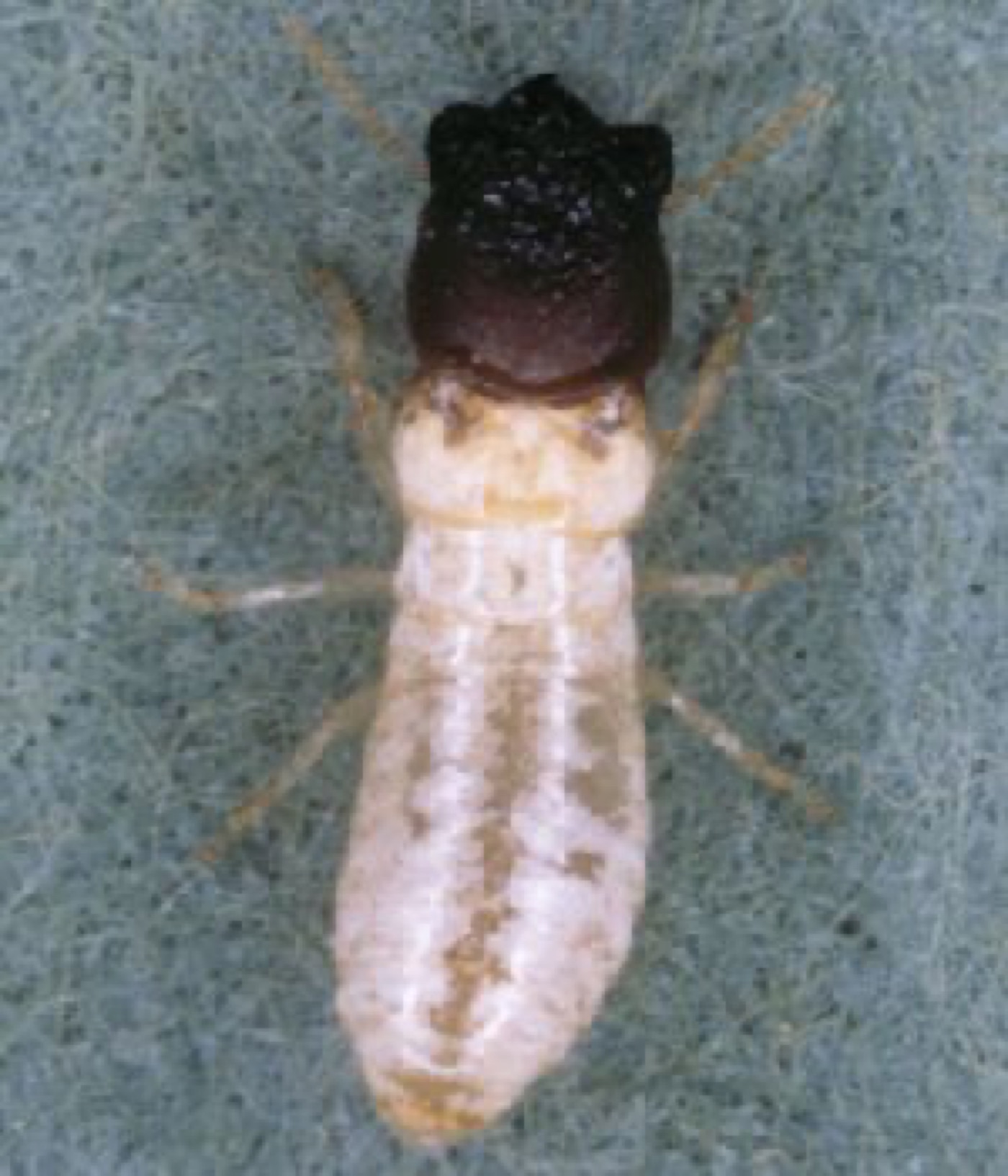
Drywood termites establish colonies entirely within wood, requiring no soil contact and no moisture source. They are common in warm coastal regions, the Southwest, and Gulf Coast states. Because they live inside the wood, they are far more difficult to detect than subterranean termites.
- Workers: cream-colored, oval-shaped, ¼–½ inch, larger than subterranean workers
- Swarmers: dark brown with a reddish-brown head; wings held flat and equal in length
- No mud tubes, colonies are entirely contained within the wood they infest
- Produce distinctive hexagonal fecal pellets (frass), hard, sand-like, pushed from kick-out holes
- Found in attic framing, wood furniture, door and window frames, and hardwood floors
Why Drywood Termites Are Dangerous
Drywood termites are slower-moving than subterranean species but devastating in warm-climate structures because they can infest any dry wood, no soil or moisture required.
Attic & Furniture Damage
Commonly infest attic framing, hardwood floors, cabinets, and antique furniture. Infestations discovered during moves or estate sales often originated years earlier.
No Soil Requirement
Can infest any dry structural wood, upper floors, interior walls, and furniture. Spread through swarming or being transported inside infested wood or furniture.
Long-Term Undetected
Colony growth is slow, a single colony can go 3–5 years without visible symptoms. By the time frass pellets or swarmers appear, damage is already extensive.
Signs You Have a Drywood Termite Problem
Drywood termites reveal themselves through frass pellets and swarmers. The absence of mud tubes makes early detection harder than with subterranean termites.
- Small piles of hexagonal, sand-like pellets (frass) below infested wood, often mistaken for sawdust
- Tiny kick-out holes in wood surfaces where termites push accumulated frass out
- Swarmers (winged termites) emerging indoors from wood surfaces, typically in spring or fall
- Hollow-sounding wood when tapped; soft spots in hardwood floors
- Tight-fitting doors or windows from wood warping as termites consume structural framing
Frass Pellets Mean Active Feeding
Drywood termite frass under wood surfaces means an active colony is feeding right now. The colony grows larger with every passing month, early treatment prevents costly structural repairs.
Get a Free Quote Or call 1-833-505-9715BRD Pest Solutions’s Drywood Termite Elimination Process
Drywood termite treatment depends on infestation scope. Localized infestations are treated with targeted injections; widespread infestations may require fumigation.
Wood & Attic Inspection
We inspect all attic framing, window and door frames, hardwood floors, and solid wood that may harbor drywood termites, including visible frass patterns indicating active feeding areas.
Targeted Treatment or Fumigation
For localized infestations, we drill and inject EPA-approved termiticide directly into infested galleries. For widespread infestations, whole-structure fumigation may be recommended.
Prevention & Monitoring
We recommend sealing wood surfaces, eliminating wood-to-structure contact points, and annual monitoring to catch new swarms before they establish.
Don’t Wait for the
Problem to Grow.
Drywood termites live inside your wood, you won't know they're there until damage is already extensive. BRD's inspection finds active colonies before they become catastrophic.