
Fire Ant
Aggressive, venom-injecting ants that attack in coordinated waves when disturbed, sending over 20,000 people to emergency rooms each year in the US.
Identifying a Fire Ant
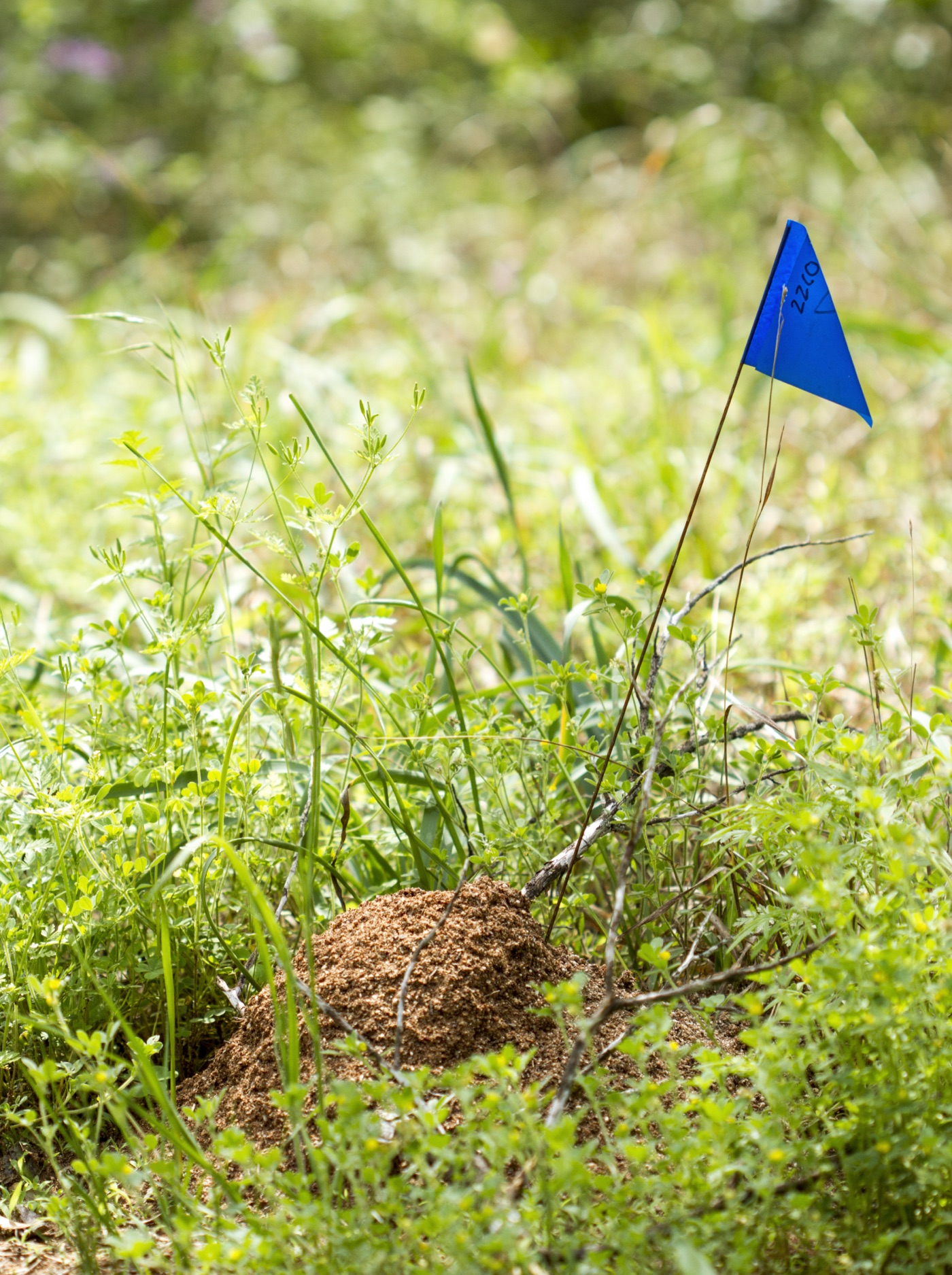
Fire ants are reddish-brown to dark reddish-black ants known for aggressive swarming behavior. Their mounds appear suddenly after rain and can house colonies of 100,000–500,000 workers.
- Reddish-brown to dark reddish-black, ⅛–¼ inch, polymorphic workers vary in size within the same colony
- No single opening at the top of the mound, flat dome with multiple underground tunnels
- Mounds can reach 18 inches high and 2 feet wide after heavy rain
- Attack in synchronized swarms when nest is disturbed, each worker stings repeatedly
- Common in lawns, garden beds, sidewalk edges, and near electrical equipment
Why Fire Ants Are Dangerous
Fire ants are one of the most dangerous ant species in the US. Unlike bees, they sting repeatedly and inject venom that causes a burning, pustule-forming reaction.
Medical Risk
Each ant stings multiple times, injecting venom that causes burning pustules. Anaphylactic reactions occur in 1–2% of the population and can be fatal without epinephrine.
Property Damage
Mounds damage lawn mowers, irrigation systems, and electrical equipment. Fire ants frequently short out utility junction boxes and A/C condensers.
Pet & Child Safety
Children and pets who disturb mounds face immediate mass stinging attacks. Small pets and infants can receive lethal venom doses from even moderate-sized colonies.
Signs You Have a Fire Ant Problem
Fire ant colonies build fast. A mound that was not there last week can house thousands of ants today, especially after warm rain.
- Dome-shaped earthen mounds with no central opening, appearing suddenly in lawn or landscape areas
- Streaming columns of reddish-brown ants boiling out when the mound surface is disturbed
- Burning, painful stings followed by white fluid-filled pustules within 24 hours
- Mounds appearing near electrical equipment, HVAC units, and irrigation boxes
- Dead patches of lawn where fire ants have displaced grass roots from heavy nesting
Protect Your Yard Now
Fire ant mounds rebound fast if treated incorrectly. Store-bought products kill surface ants without reaching the queen. BRD's professional treatments eliminate the entire colony.
Get a Free Quote Or call 1-833-505-9715BRD Pest Solutions’s Fire Ant Elimination Process
Effective fire ant control targets the queen. Treating only worker ants is temporary, within weeks, the colony rebuilds from surviving reproductives and the mounds return.
Property Survey
We locate all active mounds on the property, including satellite colonies and hidden mounds near structures, equipment, and utility boxes.
Colony Elimination
Direct mound treatments using professional-grade contact insecticide, combined with broadcast bait applications that workers carry to the queen, ending the colony at the source.
Perimeter Protection
A residual granular barrier applied around your property perimeter prevents new colonies from establishing. We return at no charge if new mounds appear within the guarantee period.
Don’t Wait for the
Problem to Grow.
Fire ant colonies rebuild fast if the queen survives. BRD's professional treatment reaches the colony source, not just the surface. Get a free quote today.