
If you have ever stepped onto your porch on a warm summer evening only to be dive-bombed by clumsy, buzzing beetles, you have met the June bug. These chunky brown beetles show up right on schedule, bouncing off windows, clinging to screens, and crash-landing near every light on your property. They are harmless to people, but they are a genuine nuisance above ground and a serious threat below it. Here is everything you need to know to get rid of June bugs and keep your lawn healthy.
What Are June Bugs?
June bugs, also called June beetles, are a group of scarab beetles in the Phyllophaga family. There are hundreds of species across North America, but they share a familiar look: a half-inch to one-inch oval body, a reddish-brown to nearly black shell, and a hard, glossy appearance. As the name suggests, the adults emerge in late spring and early summer, with activity peaking on warm evenings throughout May, June, and July.
Adult June bugs are most active after dark, which is why they seem to appear out of nowhere the moment your porch light flips on. They are strongly drawn to light, so they gather around windows, doorways, and lamps in noisy, bumbling swarms. While the adults are busy annoying you outside, their offspring are doing the real damage underground.
Why June Bugs Swarm Your Lights
Like many night-flying insects, June bugs use light to navigate. Artificial lighting overwhelms that instinct and pulls them in from the surrounding yard. A single bright porch light can attract dozens of beetles in an evening, and once they arrive, they tend to stick around bumping into walls and screens. The good news is that this attraction to light is also one of your best tools for control, which we will cover below.
Signs and Damage: Adults vs. Grubs
June bugs cause two very different kinds of trouble depending on their life stage. Knowing which one you are dealing with tells you where to focus your efforts.
Adult June Bugs
- Swarming around outdoor lights, windows, and doors on warm evenings
- Clinging to window screens and crash-landing on porches and patios
- Chewing ragged notches in the leaves of trees, shrubs, and garden plants
- Generally a loud, clumsy nuisance, but not a danger to people or pets
June Bug Grubs
The larvae are the bigger problem. June bug grubs are plump, C-shaped, cream-colored worms with brown heads that live in the soil and feed on grass roots and the roots of other plants. Because they attack the root system, the damage often looks like a watering or disease issue at first.
- Irregular brown patches of dead or dying grass that do not green up with watering
- Turf that feels spongy and lifts up easily, almost like loose carpet, because the roots have been chewed away
- Increased digging from skunks, raccoons, and birds that tear up the lawn hunting for grubs
- Thinning, weak grass in spring and late summer when grubs feed most heavily
Pests showing up where they don’t belong?
BRD Pest Solutions has local technicians ready to help with same-day service often available and a 100% satisfaction guarantee.
How to Get Rid of June Bugs
An effective plan tackles both the adults flying around your home and the grubs hiding in your lawn. Here is how to approach each.
Reduce Outdoor Lighting
- Turn off porch and landscape lights during peak evening activity, or put them on a timer
- Switch white bulbs to warm yellow or amber LED bulbs, which are far less attractive to beetles
- Move lighting away from doors so beetles gather away from your entry points
- Close blinds at night so indoor light does not draw them to the windows
Use Traps the Smart Way
Light traps and simple homemade traps can knock down adult numbers. A basic version is a bucket of soapy water placed under a hanging light: beetles bump the light, fall in, and cannot escape. Be aware that store-bought pheromone traps can sometimes attract more beetles to your yard than they catch, so place any trap well away from the house and the plants you want to protect.
Treat the Grubs in Your Lawn
Controlling grubs is the key to breaking the cycle, since today’s grubs become next summer’s swarm. Timing matters: treatments work best when grubs are young and feeding near the surface in mid to late summer. Options include:
- A targeted lawn grub treatment applied to the soil at the right time of year
- Beneficial nematodes, microscopic organisms that hunt and kill grubs naturally
- Milky spore, a natural soil bacterium that targets certain grub species over time
- Keeping your lawn deep-rooted and healthy so it can outgrow minor feeding
Natural and Low-Impact Options
- Encourage natural predators like birds by keeping a bird-friendly yard
- Hand-pick adult beetles off plants in the evening and drop them into soapy water
- Apply neem oil to protect ornamental plants and garden leaves from feeding
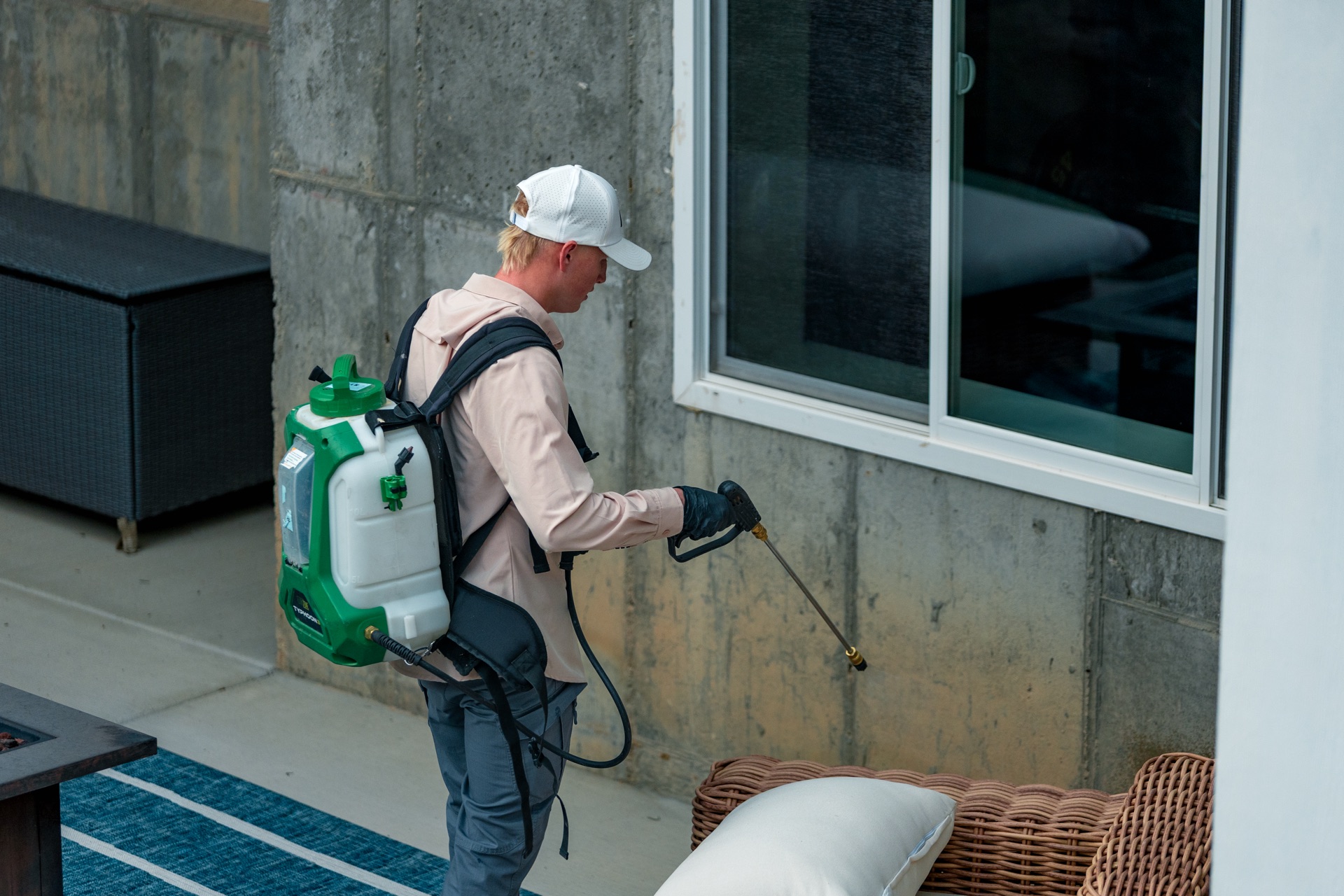
If the infestation is heavy or your lawn is already showing dead patches, a professional makes a real difference. Our team can identify the species, time the treatment correctly, and handle both the adults and the grubs in one coordinated plan. Learn more about our general pest control services and how we protect homes across Utah, Texas, Oklahoma, Georgia, and Maryland.
How to Prevent June Bugs Next Year
Because June bugs run on a yearly cycle, a little prevention now saves you a much bigger headache next summer.
- Treat for grubs on a consistent schedule so populations never build up
- Mow a little higher and water deeply but less often to grow stronger roots
- Aerate compacted soil so your turf stays dense and resilient
- Seal gaps around doors and windows so stray adults stay outside
- Keep outdoor lighting minimal and warm-toned during peak season
Want to know what else is sharing your yard this season? Browse our pest library to identify the bugs you are seeing and learn what to do about them.
Take Back Your Lawn and Your Evenings
June bugs may be harmless to you, but their grubs can quietly wreck a healthy lawn while the adults swarm your front door. With the right mix of lighting changes, smart trapping, and well-timed grub treatments, you can get them under control and keep them from coming back. If you would rather skip the guesswork, BRD Pest Solutions has you covered. Get a free quote today and let us protect your home and lawn all season long.


