What Happens During a General Pest Control Visit
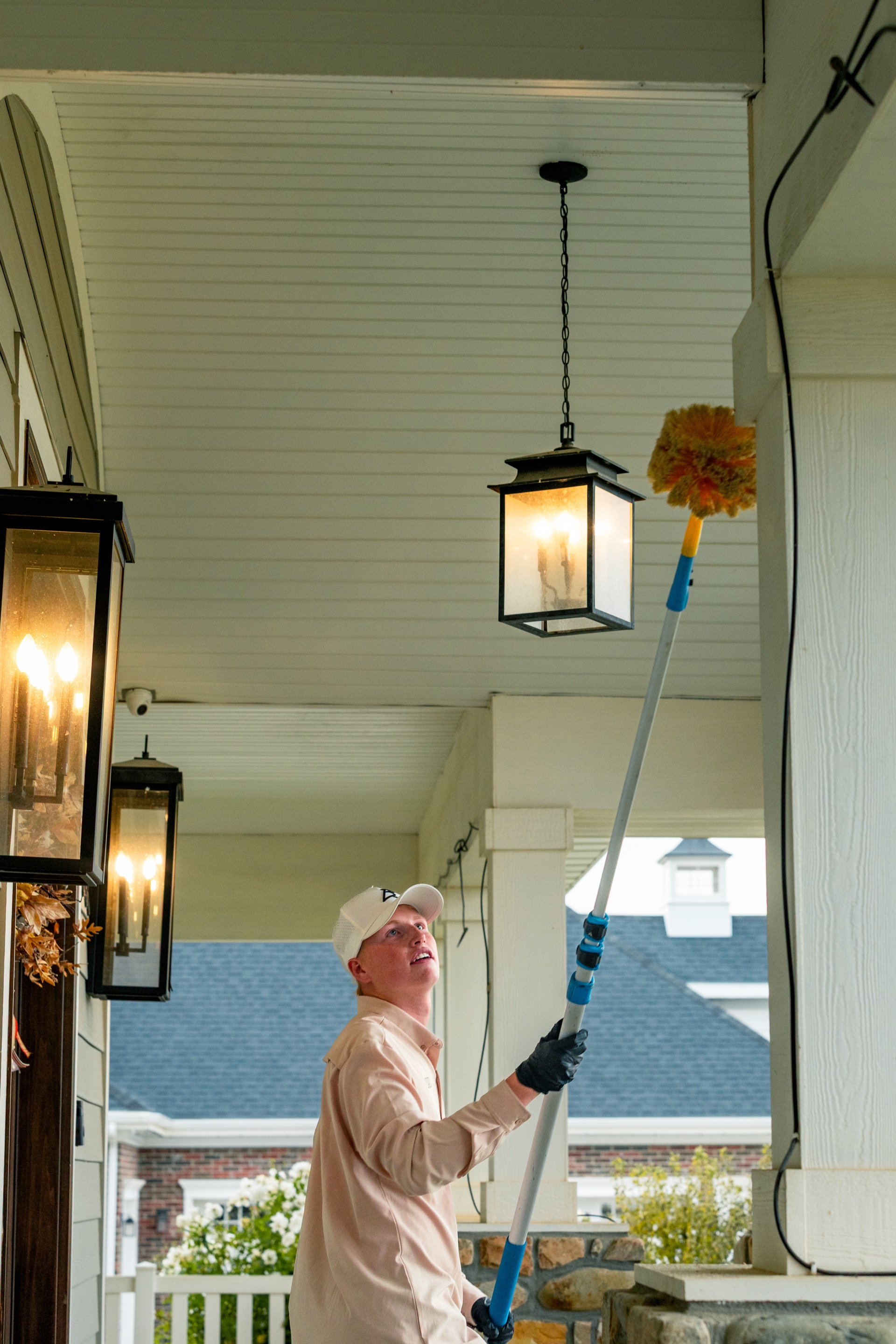
Your first visit starts outside, not inside. Your technician walks the full perimeter of the home looking for the conditions that let pests in: gaps around utility penetrations, cracked weep holes, mulch piled against siding, branches touching the roofline, and standing water near the foundation. That walk determines where the treatment actually goes, which is why two homes on the same street rarely get an identical service.
From there the exterior barrier goes down around the foundation, along door and window frames, and under eaves where spiders and wasps build. Inside, treatment is targeted rather than broadcast, concentrating on the places pests travel and harbor: under sinks, along baseboards in kitchens and bathrooms, around plumbing entries, and in the garage. Most visits take under an hour, and you only need to be home for the first one so the technician can get inside.
Why Quarterly Beats a One-Time Treatment
A single treatment solves the problem you can see today. It does not solve the fact that the pressure outside your home never stops. Ant colonies keep foraging, spiders keep moving in from the yard, and the barrier you paid for slowly breaks down under sun, rain, and irrigation. Most products hold up for roughly three months in real conditions, which is why quarterly service exists.
Each scheduled visit renews that barrier before it fails, so pests never get the window they need to re-establish indoors. The practical difference is that quarterly customers call about pests far less often than one-time customers, because the service is preventing the problem instead of reacting to it. If your home sits next to a field, a greenbelt, or water, that pressure is higher and the case for staying on a schedule is stronger.
What General Pest Control Does Not Cover
It is worth being direct about the limits. General pest control is built for the 30-plus common household insects that live around and inside the structure: ants, spiders, cockroaches, silverfish, centipedes, earwigs, and stink bugs among them. The products and placements are chosen for those pests specifically.
Termites, bed bugs, and rodents are genuinely different problems and are handled by separate services, because each needs a different approach to work. Termites require soil treatment or bait systems, bed bugs need a room-by-room protocol that reaches eggs, and rodents need bait stations serviced on an ongoing cycle. If your technician finds any of those during a general service visit, they will tell you what they found rather than treat it under the wrong plan.